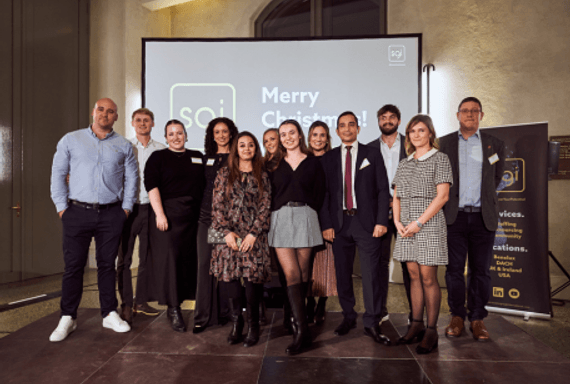

The evolution of the technology sector over the last two decades has been nothing short of revolutionary. While we often focus on the leap from Web 2.0 to Generative AI, the most significant shift is happening within the workforce itself. The "boys' club" archetype of Silicon Valley is being dismantled by a surge of female talent, bringing fresh perspectives to an industry that thrives on innovation.
In this deep dive, we explore the current state of women in tech, the tangible economic benefits of gender diversity, and grassroots initiatives that are closing the gender gap in STEM.
The Rising Tide: current statistics on women in tech
While the industry has historically been male-dominated, the tide is turning. According to the Deloitte 2024 Technology, Media, and Telecommunications Predictions, the global female tech workforce has grown by nearly 7% since 2019. More importantly, the most significant growth—approximately 20%—has been seen in female leadership roles.
Despite these gains, the broken rung on the career ladder remains a challenge. The World Economic Forum’s Global Gender Gap Report highlights that while entry-level hiring is improving, the path to the C-suite requires more intentional structural support, especially in high-growth sectors like AI and Cloud Computing.
Corporate commitments to equality
Major industry players are no longer just talking about diversity; they are setting hard targets that investors and the public can track:
-
HP: Aiming for 50% gender equality at the director level and above by 2030.
-
Intel: Pledging to double the number of women and underrepresented minorities in senior leadership by 2030.
-
Salesforce: Implementing regular Equal Pay Audits to eliminate the "gender pay gap" across its global offices.
Why fender diversity is a business imperative
Diversity isn't just a social nice-to-have; it’s a verified competitive advantage. In a landscape defined by rapid disruption, companies that fail to diversify their cognitive input risk becoming obsolete.
1. The profitability metric
Studies consistently show that gender-diverse businesses outperform their competitors. Research from McKinsey & Company suggests that companies in the top quartile for gender diversity on executive teams were 25% more likely to have above-average profitability than those in the bottom quartile. Similarly, BCG research found that companies with diverse leadership teams see a 19% increase in revenue from innovation.
2. Enhanced user experience and product design
When women are involved in product development, especially for products targeting the 50% of the population who identify as female, the results are more intuitive. From health-tech apps to automotive safety algorithms, having women in the room helps prevent the "blind spots" that arise when a monolithic group designs for a diverse world.
3. Cultural resilience and retention
Female leaders often score higher in areas of empathy, communication, and crisis management. By fostering a more inclusive and psychologically safe environment, these leaders help reduce turnover. In an era when the War for Talent is fierce, a culture that supports women is one that retains top-tier talent of all genders.
Overcoming the "Leaky Pipeline" in STEM
To sustain this transformation, we must address the "leaky pipeline." Currently, while girls often outperform boys in science and math in early education, only about 20% of students in technical higher-education subjects are women.
The drop-off occurs at several key stages:
-
Educational Perception: The lingering stereotype that "coding is for boys."
-
The First Promotion: Known as the "Step Up" barrier, where women are less likely to be tapped for early management roles.
-
Work-Life Integration: The lack of flexible working policies for parents, which disproportionately affects female retention.
5 initiatives closing the gender gap
Thankfully, the industry is fighting back. These five organisations are working to provide the training, mentorship, and advocacy needed to level the playing field:
1. 23 Code Street
A London-based coding school dedicated to women and non-binary individuals. For every paying student, they provide free digital skills training to women in underprivileged communities, creating a global ripple effect.
2. Brown Girl, Tech World
Focusing on the intersectionality of race and gender, this organisation creates a safe space for women of colour. By providing scholarships and visible role models, they ensure that the movement is inclusive of all backgrounds.
3. Code First Girls
This social enterprise has a massive goal: to provide free coding education to one million women. By partnering with global corporations, they create a direct pipeline from the classroom to high-paying technical roles.
4. Gapsquare
Innovation isn't just about software; it’s about HR tech. Gapsquare uses data science to help employers identify and close gender pay gaps in real-time.
5. Stemettes
Targeting the youngest demographic (ages 5–25), Stemettes works through hackathons and mentorship to ensure the next generation sees a career in STEM as a natural path.
Conclusion: the road ahead
The transformation of the tech industry is well underway, but we are at a critical juncture. For the industry to become a truly equitable sphere, public commitments must be backed by internal cultural shifts. We are moving from an era of awareness to an era of accountability.
At Source Group International, we are dedicated to discovering the diverse technology talent that drives businesses forward. We believe that a diverse workforce is the primary engine of innovation. Through our SuperWomen in Tech community, we facilitate the collaboration and change necessary to build a more inclusive, profitable, and creative future for the global tech landscape.