

AI has changed the conversation. But it hasn't changed the need for great Engineers.
Few topics have generated more debate within the technology industry over the past two years than artificial intelligence. The emergence of increasingly capable coding assistants, copilots and AI agents has transformed how software is developed. Tasks that once required hours of manual effort can now be completed in minutes. Development teams are delivering faster, experimenting more freely and questioning long-established ways of working.
Unsurprisingly, this has led to a broader question about the future of software engineering itself.
As AI becomes more capable, what happens to the engineers building the systems it increasingly helps create?
At SGI, we believe the answer is clear. Software engineering is not approaching extinction. It is entering a period of significant evolution.
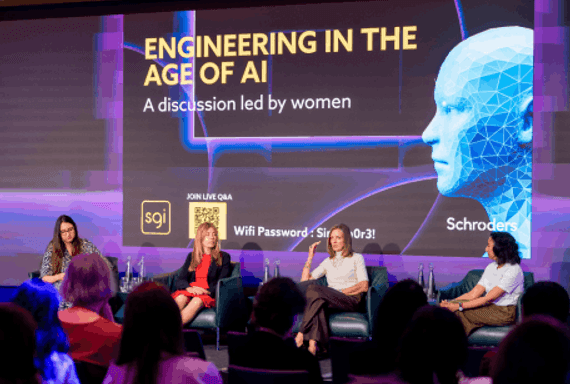
This perspective sits at the heart of our upcoming Software Engineering: Extinction or Evolution? event, where engineering leaders, technology professionals and industry experts will explore how AI is reshaping software development, what skills are becoming more valuable and what the future may hold for engineering teams and careers.
Sign up to the event here.
The role is changing faster than the profession
Predictions about the decline of technical professions are not new.
Cloud computing was expected to reduce the need for infrastructure specialists. Low-code platforms were expected to remove the need for software developers. Outsourcing was expected to significantly reduce local engineering capability.
History shows that technology rarely eliminates expertise. Instead, it changes where expertise creates value. Software engineering is following the same path.
Writing code remains a fundamental part of the profession, but it is becoming a smaller component of overall engineering value. As AI increasingly handles repetitive, routine development activities, greater emphasis is shifting to the skills around software development rather than the act of coding itself.
Architecture. Systems thinking. Security. Product understanding. Commercial awareness. Leadership. Judgement. These capabilities increasingly differentiate exceptional engineers from competent developers.
The market is not looking for fewer Engineers. It's looking for different ones.
Across SGI's specialist Software Development Recruitment practice, we continue to see strong demand for software engineering talent across Europe.
What is changing is not the demand for engineers, but the profile of engineers organisations are prioritising.
Twelve months ago, many hiring discussions centred on whether to introduce AI into development teams. Today, those conversations have matured considerably. Technology leaders now focus on governance, productivity, quality assurance, security, and workforce planning.
The conversation has moved from adoption to optimisation.
As a result, organisations are increasingly seeking engineers who can operate effectively in AI-enabled environments. Technical capability remains essential, but it is no longer sufficient on its own. Employers are placing greater value on adaptability, communication, decision-making and the ability to understand technology within a wider business context.
The engineers making the greatest impact are often not the ones writing the most code. They are the people making the most valuable decisions.
Why human judgement is becoming more important
One of the most misunderstood aspects of the AI debate is the assumption that increased automation automatically reduces the importance of human expertise.
In reality, the opposite is often true. The easier it becomes to generate code, the more important it becomes to understand whether that code is correct, secure, scalable and aligned to business objectives.
AI can accelerate delivery. It cannot own accountability. It cannot navigate competing stakeholder priorities, understand organisational context or make informed trade-offs between speed, risk and long-term value.
As AI capability continues to advance, organisations may find that technical judgement becomes one of the most valuable skills in software engineering. The challenge will not be generating solutions. The challenge will be identifying the right solutions and implementing them effectively.
The Software Engineer of the future will be broader, not narrower
The stereotype of software engineers as specialists focused solely on code is becoming increasingly outdated.
Modern engineering teams operate at the intersection of technology, product, customer experience, security and business strategy. Engineers are expected to contribute beyond implementation, influencing decision-making across organisations and helping shape the products and services they deliver.
This trend is likely to accelerate.
The software engineers who thrive over the next decade will combine strong technical foundations with broader business understanding. They will be comfortable working with AI rather than competing against it. They will understand systems, not isolated features. They will communicate effectively with technical and non-technical stakeholders alike.
In many respects, software engineering is becoming a more strategic profession, not a less important one.
What this means for Hiring Leaders
For CTOs, Engineering Managers and technology leaders, the implications are significant.
Traditional hiring processes have often focused heavily on technical capability, specific programming languages and years of experience. While these remain important indicators, they no longer provide a complete picture of future potential.
Increasingly, successful hiring decisions will depend on identifying individuals who can learn quickly, adapt to changing technologies and apply sound judgement in increasingly complex environments.
Technical depth remains essential.
However, the ability to think critically, communicate effectively and leverage emerging technologies responsibly may ultimately prove to be the more enduring differentiators. The hiring conversation is shifting from capability alone to capability plus adaptability.
Evolution creates opportunity
The narrative surrounding AI is often framed around replacement.We believe a more useful lens is transformation.
Software engineering is not disappearing. It is becoming more strategic, more collaborative and more closely connected to business outcomes. As repetitive tasks become automated, human expertise is concentrating around the areas that create the greatest value.
For organisations, this creates an opportunity to rethink how engineering teams are structured, developed and hired.
For engineers, it creates an opportunity to build broader, more influential and ultimately more valuable careers.
"The organisations we speak to aren't asking how AI can replace engineers. They're asking how their engineers can use AI more effectively. The focus has shifted from reducing headcount to increasing capability, productivity and business impact."
– Chantelle Smith, SGI
The future of software engineering will undoubtedly look different from its past. That should not be mistaken for decline.
Recognise it for what it is: evolution.
Continue the conversation
The future of software engineering is still being written.
Join SGI's Software Engineering: Extinction or Evolution? event to hear perspectives from technology leaders, software professionals and industry experts exploring what AI is genuinely changing and what organisations should be preparing for next.
To learn more about how SGI helps organisations build high-performing engineering teams across Europe, visit our Software Development Recruitment practice.